
What to remember
- Large dog gear needs strength checks, not only size checks.
- Chest girth, standing height, and body length are common deciding measurements.
- Weight ratings matter most for life jackets, crates, beds, and hardware.
Sizing Data Used On This Page
Harness measurements and checks
Measurement inputs
- Wrap the tape around the widest part of the chest.
- Check the lower neck if the harness has a neck opening.
- Leave room for comfortable movement without gapping.
Common sizing mistakes
- Relying only on breed or weight.
- Measuring too close to the front legs.
- Ignoring coat thickness and seasonal grooming.
Fit checklist
- Chest strap sits behind front legs.
- Two fingers fit under straps.
- No rubbing at armpits.
- Clip and hardware are secure.
Useful product features
- Multiple adjustment points
- Soft everyday padding
- Front and back leash rings
- Reflective trim
Breed examples from the SizeMyPet dataset
Labrador Retriever
Large size category
Typical adult range: 55-80 lb
Golden Retriever
Large size category
Typical adult range: 55-75 lb
German Shepherd
Large size category
Typical adult range: 50-90 lb
Boxer
Large size category
Typical adult range: 50-80 lb
Great Dane
Giant size category
Typical adult range: 110-175 lb
Irish Wolfhound
Giant size category
Typical adult range: 105-180 lb
Check Hardware and Weight Ratings
Large dogs put more force on clips, buckles, latches, handles, and seams. A product can fit by measurement but still be a poor match if the hardware is not built for the dog's strength or weight.
- Check harness buckle and leash ring strength.
- Look for secure crate latches and reinforced panels.
- Use life jacket weight ratings, not just girth fit.
Measure Chest and Height
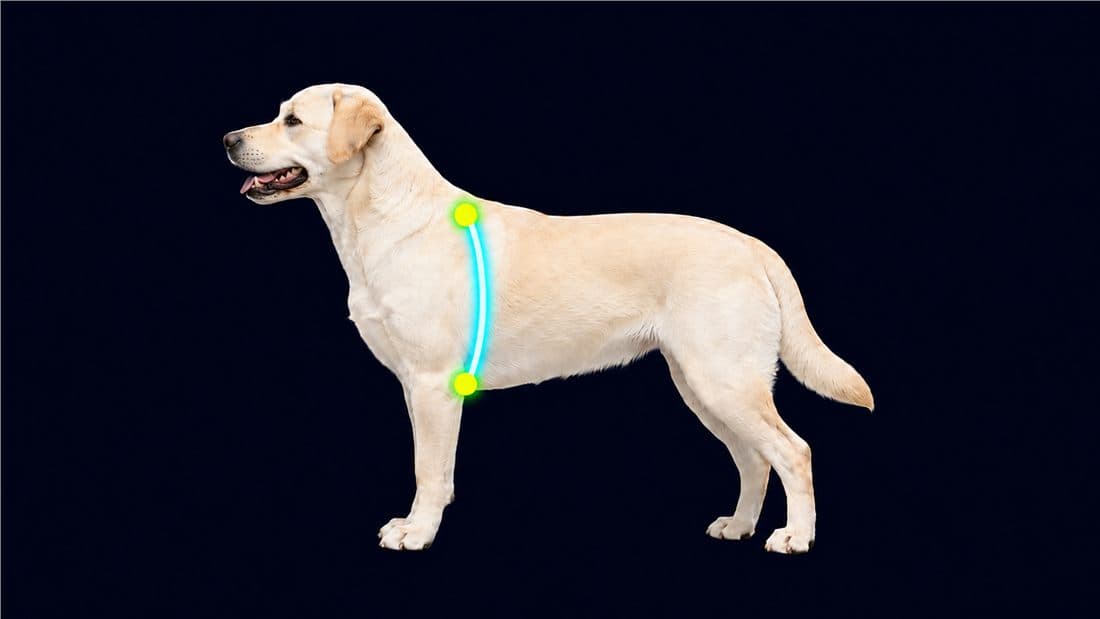
Chest girth affects harnesses and life jackets, while standing height can decide crate comfort. Large dogs often sit near the top of size ranges, so exact measurements reduce guesswork.
- Measure chest girth around the widest rib cage point.
- Measure standing height for crate door and interior height.
- Recheck after weight changes or seasonal coat changes.
Use Wider Straps and Supportive Materials
Narrow straps, thin collars, and low-density beds can be uncomfortable for large dogs. Wider contact points spread pressure, while supportive bed materials reduce flattening under weight.
- Choose wider collars or harness straps for pressure spread.
- Avoid thin beds for heavy dogs.
- Check handle placement and stitching on life jackets.
Do a Short Fit Test
Before using new gear for long walks, travel, swimming, or recovery, do a short fit test. Watch how the product behaves when the dog moves, turns, lies down, or pulls lightly.
- Look for rubbing at armpits, neck, and shoulders.
- Confirm straps stay adjusted after movement.
- Stop using gear that restricts breathing or movement.
Common questions
Is large dog gear sizing different?
The measurements are similar, but hardware strength, weight ratings, and support matter more for large dogs.
What should I check first for a large dog harness?
Start with chest girth, then check strap width, hardware strength, adjustment range, and rubbing behind the front legs.