
What to remember
- Harness sizing is mainly about chest girth and movement.
- Collar sizing is mainly about neck circumference and security.
- Strong pullers, puppies, and broad-necked breeds need extra fit checks.
Sizing Data Used On This Page
Harness measurements and checks
Measurement inputs
- Wrap the tape around the widest part of the chest.
- Check the lower neck if the harness has a neck opening.
- Leave room for comfortable movement without gapping.
Common sizing mistakes
- Relying only on breed or weight.
- Measuring too close to the front legs.
- Ignoring coat thickness and seasonal grooming.
Fit checklist
- Chest strap sits behind front legs.
- Two fingers fit under straps.
- No rubbing at armpits.
- Clip and hardware are secure.
Useful product features
- Multiple adjustment points
- Soft everyday padding
- Front and back leash rings
- Reflective trim
Breed examples from the SizeMyPet dataset
French Bulldog
Small size category
Typical adult range: 16-28 lb
Dachshund
Small size category
Typical adult range: 11-32 lb
Golden Retriever
Large size category
Typical adult range: 55-75 lb
German Shepherd
Large size category
Typical adult range: 50-90 lb
Boxer
Large size category
Typical adult range: 50-80 lb
Great Dane
Giant size category
Typical adult range: 110-175 lb
Harnesses Fit the Chest
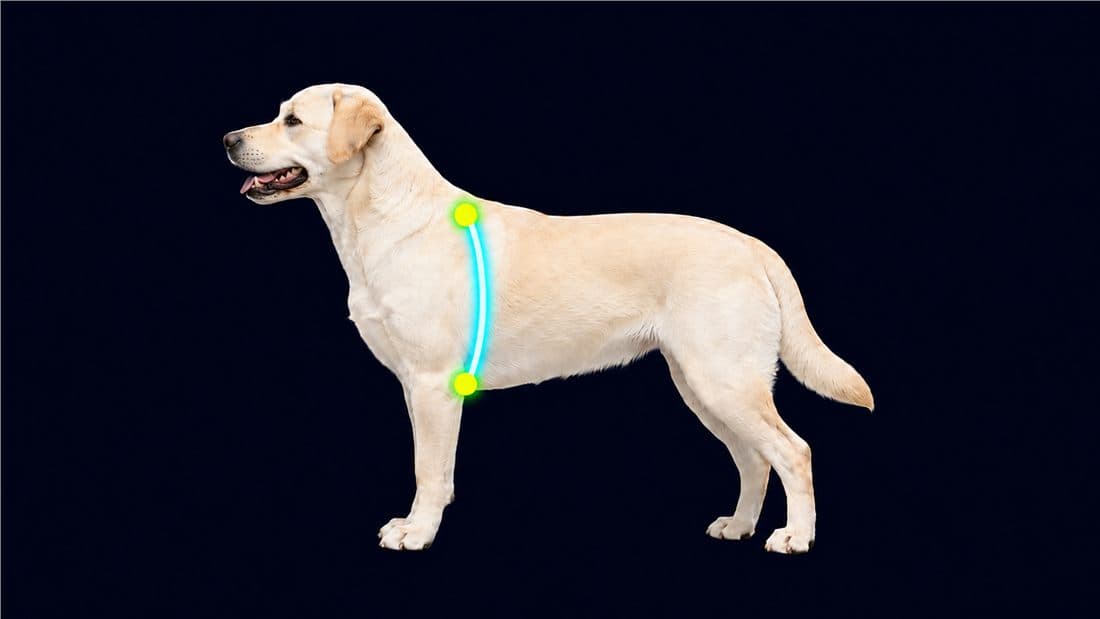
A harness spreads pressure across the chest and body, so chest girth is the main sizing input. The final fit depends on where the straps sit and whether the harness can adjust without sliding or rubbing.
- Measure chest girth behind the front legs.
- Check whether the harness has adjustable neck and chest points.
- Avoid harnesses that restrict shoulder movement.
Collars Fit the Neck
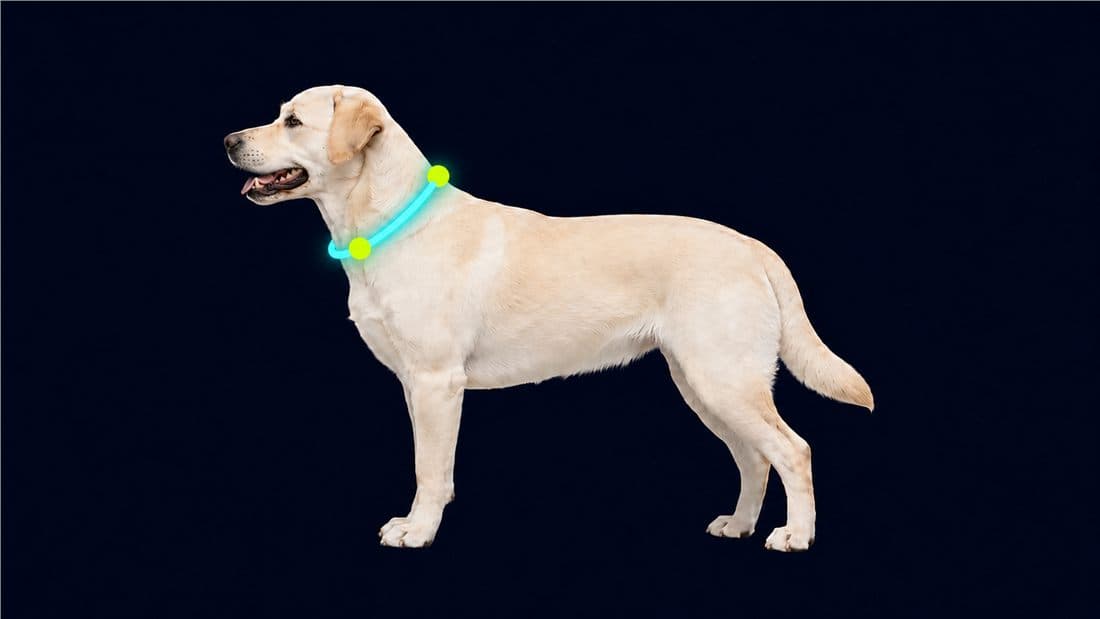
A collar needs to be snug enough to hold ID tags and stay in place, but not so tight that it presses into the throat. Neck circumference and the two-finger rule are the main checks.
- Measure where the collar naturally sits.
- Confirm two fingers fit under the adjusted collar.
- Make sure the collar cannot slip over the ears.
When Harness Sizing Is Safer
Harnesses are often easier to fit for walks when a dog pulls, has a delicate neck, or needs more body control. The tradeoff is that a poorly fitted harness can rub behind the front legs or rotate around the body.
- Use a harness for better body control on walks.
- Choose wider or reinforced gear for strong dogs.
- Watch for armpit rubbing after short test walks.
When Collar Sizing Still Matters
Even dogs that walk in harnesses often wear collars for ID tags. Collar fit should be checked separately instead of assuming the harness size says anything about neck size.
- Recheck collar fit after grooming or weight changes.
- Use sturdy hardware for large or strong dogs.
- Do not use a loose collar that can slide over the head.
Common questions
Is harness size the same as collar size?
No. Harnesses usually rely on chest girth, while collars rely on neck circumference.
Do I need both a collar and harness measurement?
Yes if you are buying both products. Each one fits a different part of the dog and should be checked separately.